
Load Securing
Container Dunnage Bags and Cargo Securing
Dunnage bags that fill the voids inside containers and trucks so cargo cannot shift during transport.
Air bag types
Polypropylene and kraft dunnage air bags
Both types fill the void between loads to stop cargo shifting; they differ in outer material and strength classes. Click a product to see its uses and features.

Polypropylene (PP) Dunnage Air Bags
Dunnage air bags for container and truck cargo, with a PP woven outer surface that resists moisture, water and tearing.
Product details
Kraft Dunnage Air Bags
An economical dunnage air bag with a multi-ply kraft paper body, made in high strength classes for heavy loads and rail transport.
Product details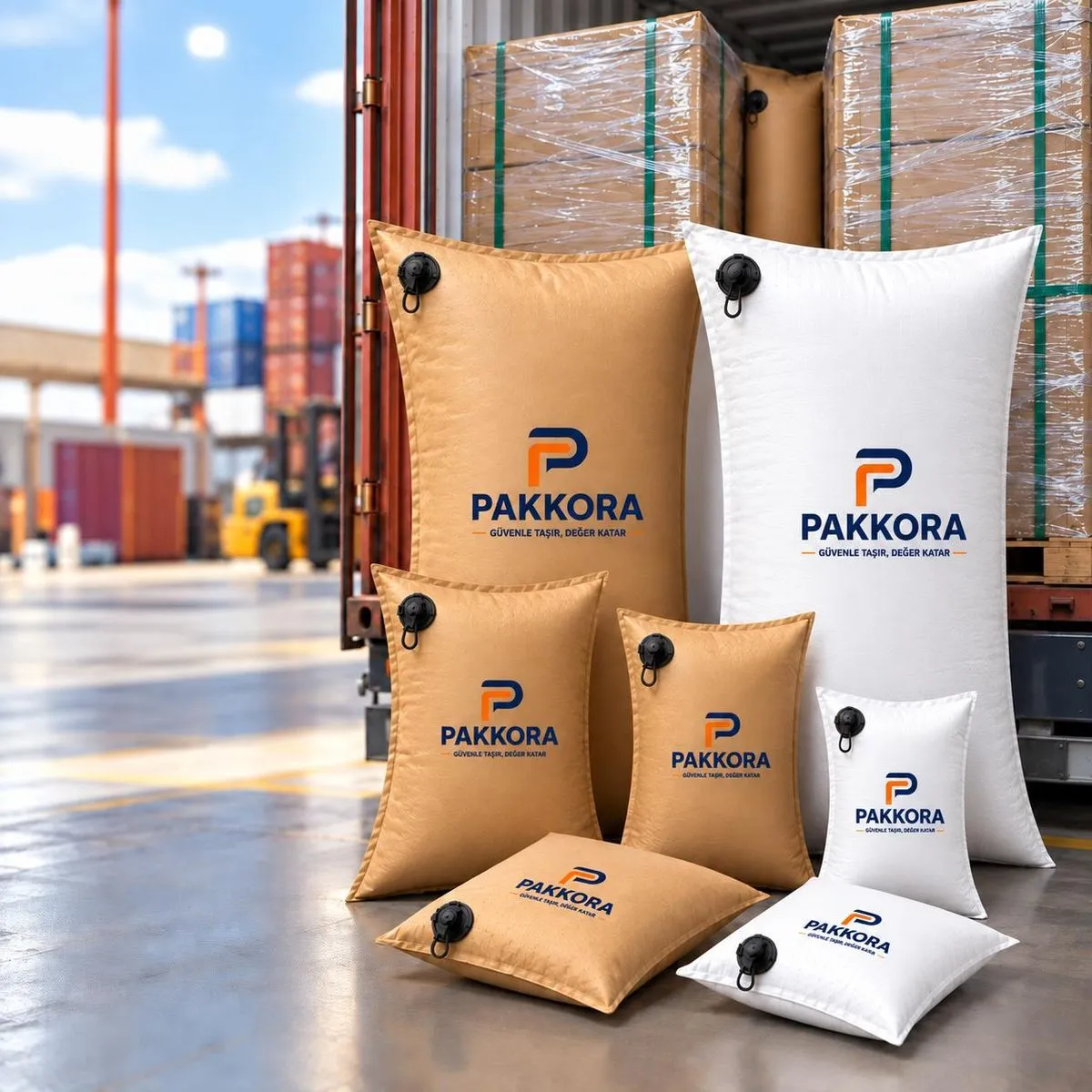 Load Securing
About the product
Container dunnage air bags come in two main types: polypropylene (PP) dunnage bags that resist moisture and tearing, and kraft dunnage bags made in high strength classes. They are used between pallets, in gaps between cartons and in the void in front of container doors, and are the fastest way to prevent cargo movement in containers and trucks. Supplied in different sizes and strength classes depending on cargo weight and transport mode, they are inflated within seconds with an inflation gun.
Key features
- Kraft paper and PP woven surface options
- Different sizes and strength classes
- Recyclable, single-use structure
- Inflated within seconds, easy to apply
Level chart
Dunnage air bag strength levels
Air bags are graded from Level 1 to Level 5 by the number of plies. More plies mean a higher burst strength; the right level depends on the load weight, the gap size and the mode of transport.
Level 1
- Construction:
- 2-ply kraft paper or PP woven
- Transport mode:
- Container, truck and lorry
- Load type:
- Light to medium loads
Level 2
- Construction:
- 4-ply kraft paper
- Transport mode:
- Container, truck and intermodal
- Load type:
- Medium to heavy loads
Level 3
- Construction:
- 6-ply kraft paper
- Transport mode:
- Railcar, intermodal
- Load type:
- Heavy loads
Level 4
- Construction:
- 8-ply kraft paper
- Transport mode:
- Railcar
- Load type:
- Very heavy loads
Level 5
- Construction:
- 10-ply kraft paper
- Transport mode:
- Railcar
- Load type:
- The heaviest loads and widest gaps
The right level and size follow from the load weight, the gap width and the route. Let us help you choose the bag for your load.
How to use
How is a dunnage air bag used?
An air bag fills the void between loads so they cannot shift or topple in transit. Fitting one takes four steps.
- 1
Measure the gap
Choose an air bag that matches the width and height of the gap between the loads.
- 2
Place the bag
Put the deflated bag in the gap with the valve within reach and the bag clear of the floor.
- 3
Inflate
Fit the inflation gun or tool to the valve and inflate the bag to the recommended pressure.
- 4
Close the valve and check
Close the valve cap; check the bag sits fully against the load and clear of sharp edges.
Where it is used
Void filling inside containers
Truck and trailer loading
Securing between pallets
Rail wagon transport
Related products
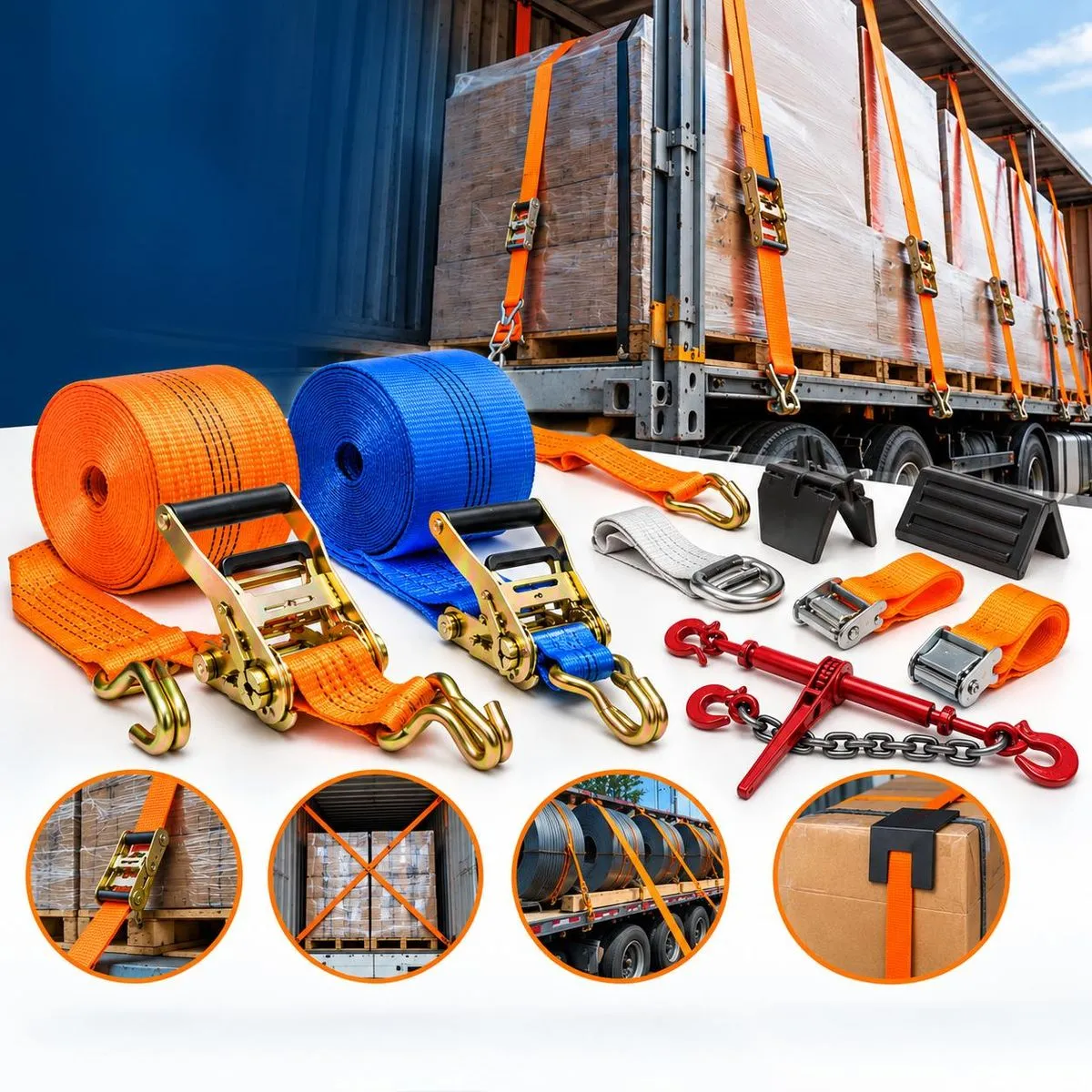
Strapping and Cargo Securing Systems
Strapping and lashing systems that fix cargo to the pallet, the floor and the container wall.
Product details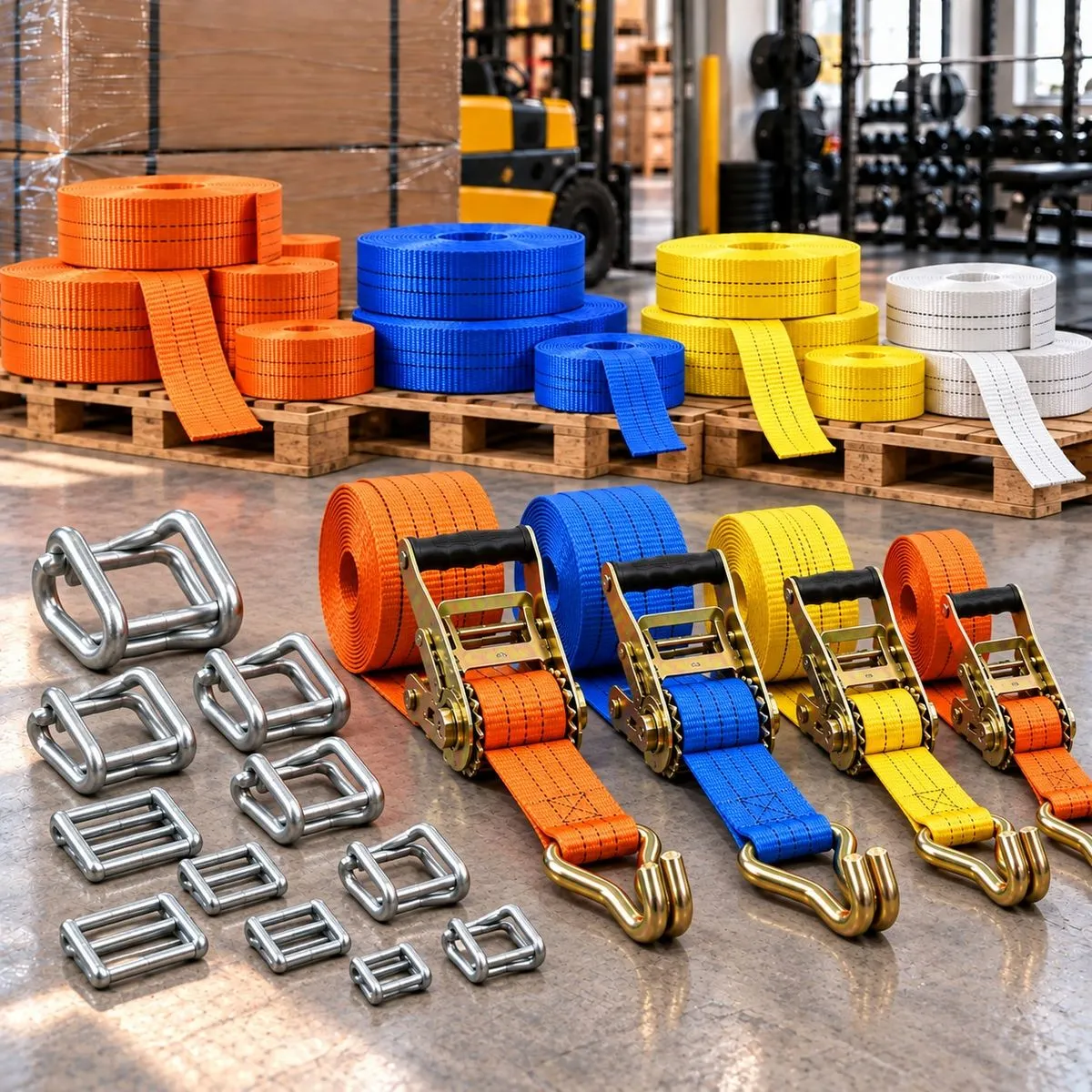
Ratchet Straps and Buckles
Ratchet straps, polyester webbing and strapping buckles that tie cargo down firmly in containers, trucks and on flatbeds.
Product details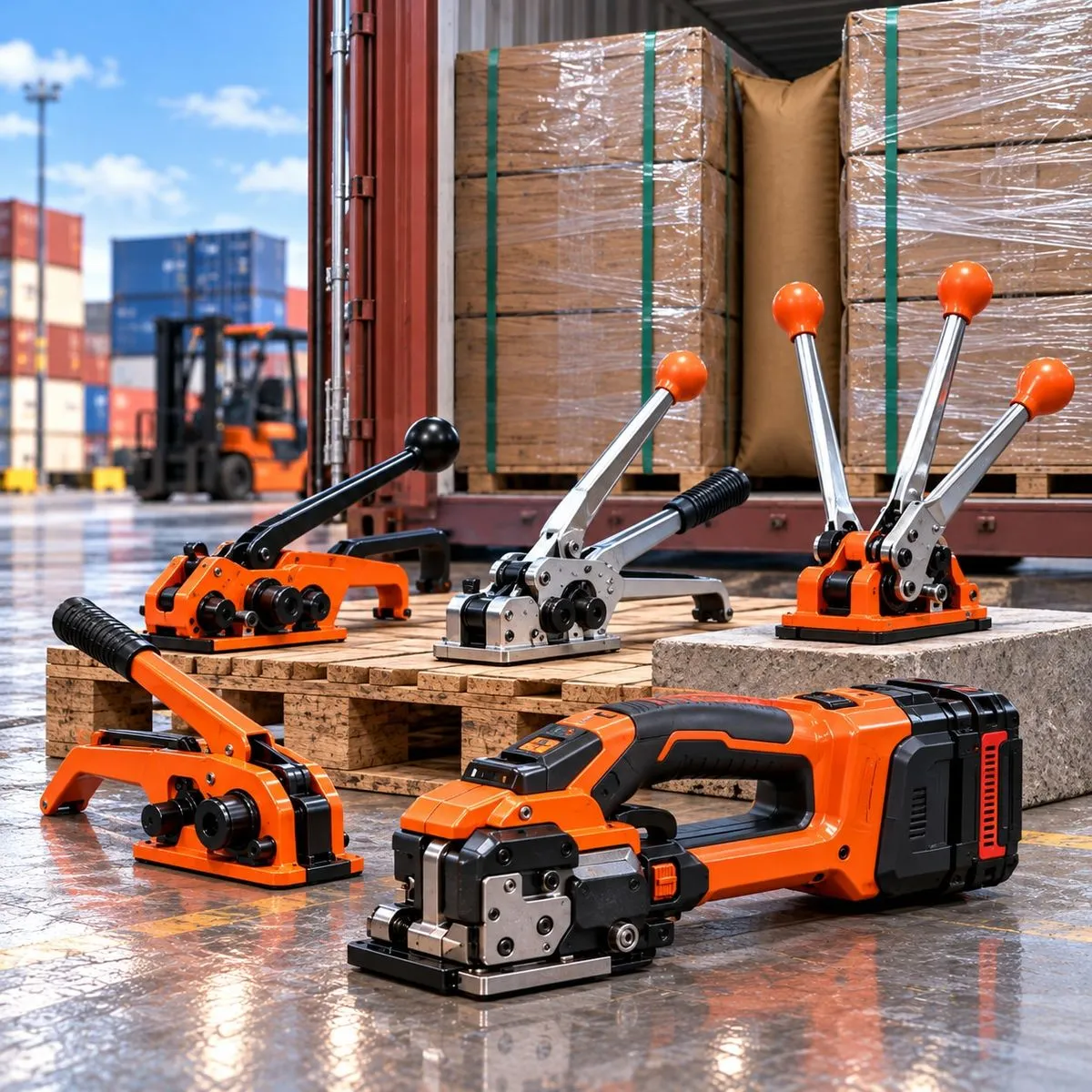
Lashing Tensioning Tools
Manual and battery-powered tools for tensioning and sealing lashing and strapping bands at the correct tension.
Product detailsCan't find what you are looking for?
We have more than 500 product and solution alternatives. Tell us what you need and we will find the right one together.